
How Much Money are You Going to Make?
Getting invested in the right asset classes is the most important decision to get right - that’s because each type of asset earns a different return. If you haven’t read “How Investments Really Work - parts 1 & 2”, check those out first.
What can you realistically expect to earn on your investments?
Remember the ingredients of return are: income + capital growth. In a picture:
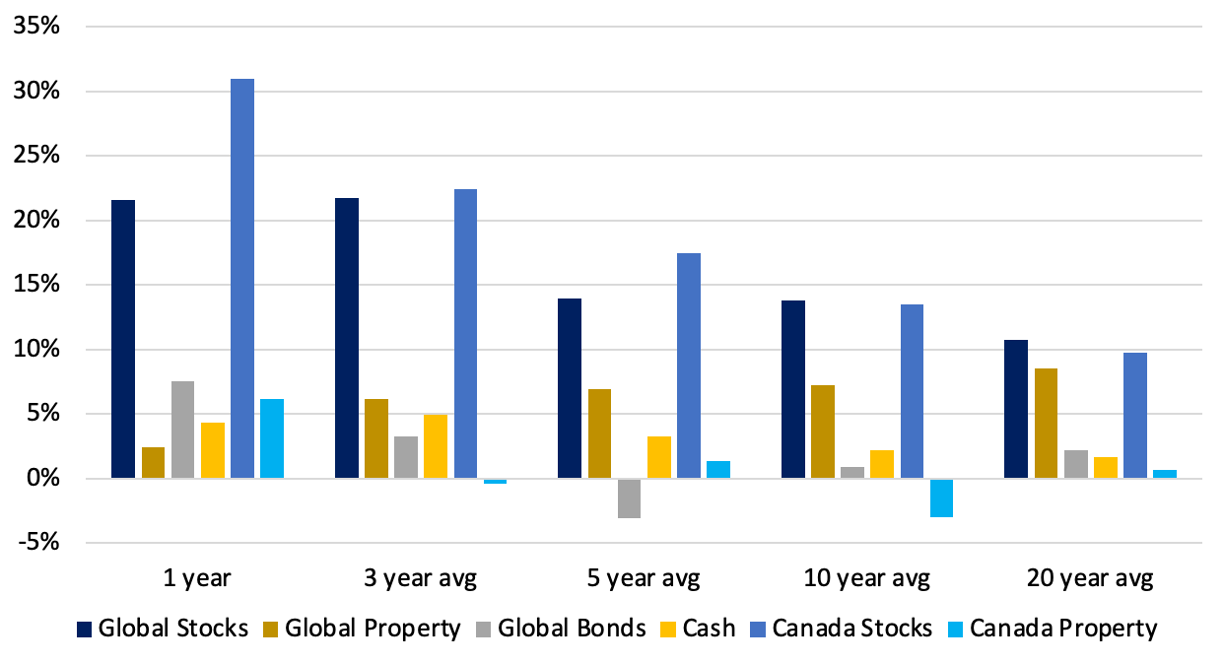
Total returns by asset class as at 31 December 2025. Source: Bloomberg
The stand-out performers are global and Canadian stocks. And yes, they have had a good run post-pandemic, but the 20 year average also includes the global financial crisis in 2007/8 so it is a true picture looking through the cycle.
20 year average total investment returns ranked:
Global Stocks = 10.7%
Canadian Stocks = 9.7%
Global Property = 8.6%
Global Bonds = 2.2%
Cash = 1.7%
Canadian Property = 0.6%
This tells you how much money you can expect to make on an annual basis from investing in each of these asset classes. There is no effort involved, you put your money to work and get to along for the ride. We prefer a passive investment strategy which is a topic for another day.
Next year’s returns are no guarantee but the longer you stay invested, the more likely your investment returns will average out and match the 20 year average picture.
When you look at this you want to put all your money in stocks and potentially global property! Remember they offer no capital protection so it’s only advisable if you have a longish time frame until you need to access your money and the stomach to ride out short term fluctuations. Some years you lose and others you gain, but the trajectory is up.
It’s a simple risk-reward equation - the ranking of asset class returns, from highest to lowest, is unlikely to change. This said, we expect Canadian property to behave more like Global property. In the an upcoming post we’ll explore why the higher returning assets can be a wilder ride in the short-term as we get to grips with the risk of loss.